
Finance Transformation

SAP S/4HANA: Clear direction. Effective execution.

S/4HANA creates the opportunity to realign processes, responsibilities, and management mechanisms. 4C brings together business ambition, technological feasibility, and effective implementation.

S/4HANA as a catalyst for sustainable development

An S/4HANA transformation requires companies to revisit fundamental decisions: Which processes should be standardized in the future? Where is deliberate differentiation needed? And what information must leaders have available to manage effectively?

This is precisely where its strategic value lies. Organizations that do not reduce transformation to a mere system change can eliminate legacy custom solutions, consolidate data and responsibilities, and consistently align management processes with their business model. S/4HANA thus becomes an opportunity not only to modernize the organization technologically, but also to develop its capabilities sustainably over the long term.

This is an embedded YouTube video that is activated when you click the play button.
The video is in German. English subtitles can be enabled in the YouTube player settings.

Maintenance deadlines increase the need for action

Mainstream maintenance for the core applications of SAP Business Suite 7 ends at the end of 2027. SAP subsequently offers optional extended maintenance through the end of 2030. This makes an early decision on the future transformation path increasingly relevant for many existing customers.

Source: SAP Maintenance Strategy for SAP S/4HANA and SAP Business Suite 7

Why companies need to act now

The relevant question is not whether companies need to further develop their SAP landscape. What matters is whether they can still determine the timing and strategic direction of the transformation themselves. Technical deadlines, limited resources, and the demands of ongoing operations are increasingly reducing this room for maneuver.

Those who establish clarity around the target state, governance model, and priorities at an early stage lay the foundation for consistently aligning the transformation with corporate strategy. Acting now does not necessarily mean implementing immediately. It means making the key decisions while they can still be shaped on the basis of strategic objectives.

When the transformation
is being prepared

Trigger 01

Technology-driven need for action

SAP landscapes that have evolved over many years become a strategic bottleneck when even individual business or regulatory changes require extensive adjustments. Increasing complexity ties up IT capacity and slows the implementation of business decisions.

S/4HANA therefore requires an architectural decision with long-term implications. The future system landscape must be easier to manage while also supporting the further development of the business model. This will determine whether S/4HANA merely renews the technological foundation or sustainably strengthens the organization’s ability to change.

Trigger 02

Processes & organization

Different ways of working and unclear responsibilities mean that decisions repeatedly need to be aligned across functions. What may appear appropriate in an individual case comes at the expense of speed and commitment at the enterprise level.

The transformation provides an opportunity to redefine process ownership and decision rights. This is not about standardization at any cost. Consistent processes are appropriate where they facilitate collaboration. Differentiation remains important where it creates a clear competitive advantage.

Trigger 03

Data & performance management

Different performance indicators are rarely just a reporting issue. They show that functions assess business success based on different logics—with the result that decisions must first be negotiated through definitions and data sources.

S/4HANA does not resolve this issue automatically. However, the transformation creates an opportunity to define performance indicators, data ownership, and management routines in a binding manner. Only when these foundations apply across functions does the discussion shift from which number is correct to which decision should follow from it.

When the transformation
is already underway

Transformation underway

Transformation under pressure

At the beginning of a program, ambiguities can often still be absorbed. During testing and the transition into operations, however, they quickly become a tangible risk. Decisions must be made under time pressure while the scope for corrections decreases.

A detailed schedule alone does not create control in this situation. Clear responsibilities and a reliable picture of the actual risks are crucial. This ensures that the transformation remains manageable even in critical phases.

Transformation underway

The expected benefits do not materialize

Initially, go-live only confirms that the new system functions technically. Whether the transformation actually contributes to the business only becomes apparent in day-to-day operations.

If processes and responsibilities remain largely unchanged, existing complexity is merely transferred to a new platform. Impact is only created when the introduction of the system is accompanied by an evolution in how the organization collaborates and is managed.

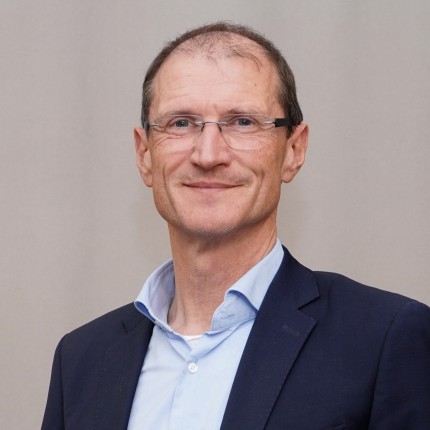
“We support the business side in taking ownership of its project leadership responsibilities and in deliberately involving the available subject matter experts in the project.”

Uwe Dorst · 4C Partner · CEO Advisory

Our approach

From transformation ambition to reliable delivery

The path to S/4HANA must bring the company’s strategic ambition into alignment with its organizational capacity for change.

The starting point determines management’s focus

The required focus shifts over the course of the transformation: from establishing a sound basis for investment, through effective program management, to a controlled transition into operations. Each phase places specific demands on management decisions.

Where is your S/4HANA transformation today?
Investment decision

Before the investment decision

Establish a robust target state and investment framework.

Before approval, the target state, scope, and expected value contribution must be sufficiently specific to assess the investment against strategic priorities and realistic delivery requirements. Only then can the roadmap provide binding guidance for the further transformation.

Management outcome

The investment decision is placed on a sound foundation. Management gains clarity on how the transformation contributes to strategic development and which requirements must be met to transition into the next phase.

Program execution

During the program

Safeguard the ability to manage the program.

As implementation progresses, dependencies and trade-offs intensify. For management, the focus is no longer solely on meeting milestones, but on identifying the decisions required to protect the program’s value contribution without disrupting feasibility, the risk profile, or the timeline.

Management outcome

Management has a shared view for guiding the program’s critical decisions. Trade-offs are identified early and made transparent along with their consequences, enabling priorities to be set deliberately before they become embedded in subsequent escalations.

Go-live & operations

Before and after go-live

Secure the transition and prepare for stabilization.

At go-live, it becomes clear whether the decisions made during the program will hold under real operating conditions. Business-critical processes, data quality, support structures, and decision rights must work together to maintain operational performance. The first weeks of operation also create the basis for clear prioritization: What needs to be stabilized immediately, what can be adjusted in a controlled manner, and which further developments are justified from a business perspective?

Management outcome

The operating organization takes ownership of a solution with clearly assigned responsibilities and a transparent approach to outstanding issues. Management gains visibility into where business continuity still needs to be secured and can clearly distinguish short-term stabilization measures from further development initiatives.

Services

The right support for your transformation situation

Whether before the program starts, during implementation, or ahead of go-live: 4C provides support where business decisions, technological implementation, and organizational change come together.

The following services can be commissioned individually or combined across the entire transformation. The allocation indicates the phases in which they are typically most relevant.

Before the investment decision

Target state & transformation roadmap

Typical services

Target state · Business case · Roadmap · Scope & prioritization

During the program

Transformation Office & governance

Typical services

Program management · Governance · Management reporting · Decision management

Before the investment decision & during the program

Business & Finance Design

Typical services

End-to-end processes · Finance & controlling · Reporting & planning

During the program

Integration & quality assurance

Typical services

Integration · Test management · Data migration · Quality assurance

During the program & before go-live

Change & Business Readiness

Typical services

Stakeholder management · Communication · Enablement · Training planning

Before and after go-live

Cutover, rollout & transition to operations

Typical services

Cutover management · Rollout · Business continuity · Stabilization phase

4C Insight

The Three Most Common Mistakes in S/4HANA Projects

Three recurring patterns that determine the success or failure of ERP transformations

Driving Transformation

In transformation we see not just the forest, but also the trees.

An SAP transformations is far more than the implementation of a new system platform. It requires the coordinated evolution of business processes, data, systems, and organizational accountabilities.

This is where 4C comes in: We help companies align these changes strategically, govern them effectively, and embed them sustainably into their operating model. In doing so, we combine SAP experience with management and transformation expertise.


What sets us apart

Sparring partner at eye level

We align the perspectives of management, business functions, IT, and implementation partners. This creates clarity on strategic objectives, priorities, and critical decisions.

Backup for top management

We provide decision-ready guidance and reliable support during pivotal phases. Throughout we keep the transformation firmly anchored in measurable business value.

De-risking transformation

We surface dependancies, risks, and competing priorities at an early stage. This creates the transparency and governance needed to steer the SAP transformation with confidence.

Enabler on site

We empower leaders and teams to act as capable, well-informed business owners. Knowledge, accountability, and decision-making capability remain embedded in the organization.

Advocate of regular operations

We give the requirements of business and ongoing operations a consistent voice throughout the transformation. This ensures that processes, roles, and systems deliver sustainable value well beyond go-live.

Our mission

Driving Transformation means driving unknown routes together with our clients.

Your Temporary Co-drivers

Your trusted partner for the decisions ahead

FAQ

Your most important questions about S/4HANA transformation

No. There is no blanket requirement to migrate by 2027. Mainstream maintenance for the core applications of SAP Business Suite 7 ends at the end of 2027, after which SAP offers optional extended maintenance through the end of 2030. This does, however, increase the pressure on companies to make a decision. The most appropriate transformation and maintenance path depends on each organization’s existing system landscape, contractual arrangements, and business objectives.
The need for action is not driven by maintenance deadlines alone. It often arises from legacy system landscapes, high process complexity, inconsistent data, or growing requirements for reporting, planning, and performance management. A useful first step is to assess the current situation: What risks and opportunities exist? Which decisions are time-critical? And what contribution should S/4HANA actually make to the business?
Not every requirement and innovation idea needs to be implemented with the initial go-live. The first implementation phase should clearly distinguish between the necessary technical transition and mandatory process changes, on the one hand, and further optimization initiatives, on the other. A clearly prioritized scope reduces complexity, protects time and budget, and creates room to gradually realize further potential after stabilization.
Implementation partners are primarily responsible for the technical delivery. For the organization, however, the transformation also involves the target state, priorities, decision-making, governance, and the involvement of the business functions. 4C supports the business side in effectively fulfilling its role as the project sponsor and in managing collaboration with IT and implementation partners from an independent management perspective.
Effective management requires clear responsibilities, transparent decision-making paths, and a reliable view of progress, risks, dependencies, and trade-offs. Especially when the scope changes or time and budget are under pressure, management needs a sound basis for decision-making. An effective Transformation Office and appropriate governance help ensure that program priorities are pursued consistently and critical issues are addressed in a timely manner.
Yes. Support can be valuable both before a program begins and during an ongoing transformation—for example, where scope is unclear, decisions are delayed, business integration is lacking, testing is critical, or risks arise around cutover and go-live. Together, we can identify the specific bottleneck and determine which measures can quickly restore transparency, decision-making capability, and stability.

We would be happy to discuss which questions are relevant to your transformation.

Get in touch


We support your Transformation.

Contact us now!


Contact us now with no obligation

We appreciate your message and will get back to you promptly. You can find information about data processing in our data protection notice.

Your non-binding enquiry

We appreciate your message and will get back to you promptly. You can find information about data processing in our data protection notice.

Submit a non-binding inquiry
Contact us for a non-binding discussion and tell us about your concerns.