Critical transformations do not need additional momentum. They need steerability.
When programmes are large, visible and strategically relevant, classic progress management is not enough. It is about value contribution, risk steering, dependencies, organisational absorption capacity and discipline in steering.
What needs to be steered cleanly now so that transformation actually creates impact?
How you recognise when transformation becomes a CEO responsibility
Critical programmes rarely reveal their true situation in a single report. What matters is the pattern across value contribution, decisions, dependencies, risks and organisational viability.
-
01
A central transformation programme reports progress, but the resilient value contribution remains unclear.
-
02
Decisions are prepared in committees but are not made or followed up with discipline.
-
03
A critical provider or platform becomes a bottleneck for speed, quality or security.
-
04
Cyber risks increase alongside the transformation, without clear ownership and escalation logic.
-
05
The business demands speed, while operations processes, roles or routines are not yet able to carry it.
-
06
Too many local exceptions, special solutions and legacy logics prevent scaling and make implementation unnecessarily difficult.
The CEO question is then no longer "How much more are we doing?", but: "What needs to be steered cleanly now so that transformation actually delivers?"
Three fields where transformation becomes steerable
Transformation becomes steerable where value contribution, risks and organisational viability are brought together. These three fields structure exactly this steering task.
Governance of critical transformations & value assurance
Critical programmes need a steering framework that does not merely track activity, but secures impact. What matters is which initiatives actually create value, where governance is effective and where implementation risks become visible early.
- Secure the value contribution of critical programmes
- Design effective governance
- De-risk implementation risks
Implicit CEO questions
"Which programmes truly contribute to future value?"
"Where am I losing steerability, even though reporting still suggests stability?"
"Which risks belong on my agenda now — not only at the next escalation point?"
Reduce cyber and partner risks
The more digital and interconnected transformation becomes, the more providers, platforms and cyber risks determine real ability to act. What may look like a technology issue is, in reality, a leadership question.
- Reduce critical provider dependencies
- Actively steer cyber and platform risks
- Systematically strengthen digital resilience
Implicit CEO questions
"Where am I effectively more dependent than I would like to be?"
"Which risks threaten not only systems, but the delivery capability of my transformation?"
"How much resilience do I need now without overengineering the business?"
Secure operating model & routines
Transformation only delivers when business and operations are able to connect. This requires reducing complexity, preparing routines and setting standards where individual logic does not create additional value.
- Reduce complexity
- Prepare business & operations
- Standardise where differentiation does not create value
Implicit CEO questions
"What needs to be in place organisationally before the next scaling stage?"
"Where do special logics create more friction than benefit?"
"Which standardisation strengthens impact — and where would it destroy value?"
What becomes clearer after the assessment
The result is not another package of measures, but a clearer leadership picture for critical implementation.
-
01
Which transformations should deliver real value contribution — and which primarily tie up capacity.
-
02
Where governance needs to be sharpened so that decisions, escalations and accountability take effect.
-
03
Which provider, platform and cyber risks genuinely endanger implementation.
-
04
Which organisational prerequisites need to be created before the next implementation stage.
-
05
Where standardisation relieves leadership — and where differentiation should be deliberately protected.
In short: You see more clearly what needs to be steered, protected, prioritised and simplified so that transformation can create impact again.
Transformation becomes effective when trade-offs are actively steered.
In our experience, transformation rarely fails because of insufficient analysis. It succeeds or fails based on the discipline applied to managing trade-offs.
-
Secure speed
vsMaintain governance
-
Strengthen resilience
vsPreserve efficiency
-
Standardise
vsProtect differentiation
-
Drive transformation
vsKeep day-to-day business stable
Let us talk about your priorities
Which transformations now truly need to deliver? Where is your steering framework too weak for the scope of the initiative? And where are dependencies, risks or operational friction putting the intended impact at risk?
- If these questions are becoming more pressing in your organisation, a confidential conversation is worthwhile.
Your co-pilots for a defined period
Directly available for critical transformations, clean steering and effective next steps.
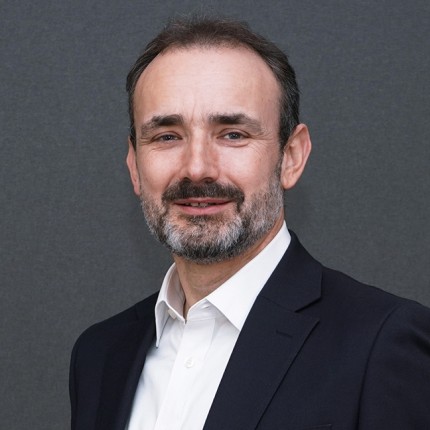
Hans-Martin Schneider
Senior Partner
When critical transformations need to be reprioritised, focused and secured in terms of their impact.
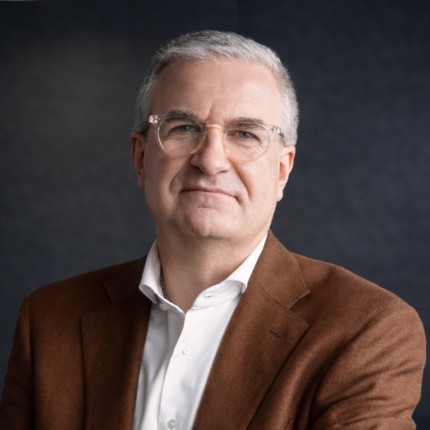
Uwe Dorst
Partner
When governance, technology, platforms and complex programmes need to be brought back together cleanly.
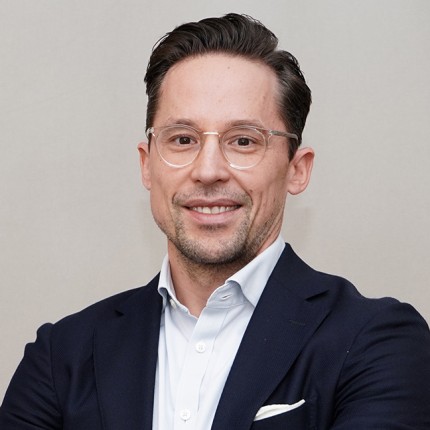
Felix Hesse
Partner
When transformation logic, new sources of value and alignment with the business model need to be considered together.
Hans-Martin Schneider
MBA
The unconditional will to change things for the better is probably part of the basic mindset of every 4C consultant.
Those who demonstrate this talent even in difficult situations will go far at 4C — especially if, like Hans-Martin Schneider, they bring a clear vision for the future, assertiveness, enjoyment in developing new business approaches, a good sense of humour and, above all, energy.
His focus areas include shaping the future transformation of companies, realigning and digitalising business models, as well as corporate development, growth and restructuring.
He has extensive experience in the services, technology and financial services sectors, as well as in advising owner-managed companies.
Uwe Dorst
Degree in Industrial Engineering and Management
Successful mediators are usually familiar with both sides of a problem. Uwe Dorst is such a mediator: as an industrial engineer, he brings both technical understanding and broad business expertise into the consulting process.
This is particularly valuable when corporate steering, organisation and process optimisation need to work together — especially when done as calmly, thoughtfully and deliberately as is typical for him.
Uwe Dorst has outstanding experience in financial services and business transformation. His focus areas include IT strategy, modernisation of IT platforms, sourcing management, operations and processing, digitalisation, and project governance and management.
Felix Hesse
M.Sc. Industrial Engineering and Management
What are the business models of tomorrow? How will companies generate profits in the future? Which opportunities will digitalisation open up?
Felix Hesse is already addressing these questions today: with his strong passion for digitalisation, he supports his clients in challenging existing business models and making them fit for the future.
His strong sense of customer needs and, above all, his instinct for smart solutions help him in this work. Felix focuses on developing innovative digital services and products and sees himself as a driver of innovation — especially when it comes to creating added value for his clients.
In addition, he is an expert in business model development and in identifying new revenue sources.
Critical programmes only create impact within the overall picture.
Delivering transformation is part of the overall CEO perspective.
Critical programmes cannot be steered in isolation. What matters is how securing future readiness, innovating the business model and delivering transformation work together.
- what needs to be protected,
- what should carry growth,
- and what now requires discipline in implementation.